Challenges and Impact of Emerging Technologies on the Biological Sciences for Human Health in India
The integration of advanced technologies like AI, genomics, biotechnology, nanotechnology, and telemedicine has the potential to revolutionize healthcare in India. These technologies can improve diagnostic accuracy, treatment efficacy, and patient care. However, they also present challenges such as ethical concerns, infrastructural barriers, regulatory hurdles, and cost and accessibility issues. Ethical concerns include patient data privacy, infrastructural and technological barriers, regulatory hurdles, and cost and accessibility. India faces challenges in providing fair access to advanced healthcare technologies, particularly in rural areas. A skilled workforce is also crucial for successful integration.
Emerging technologies in India have significantly impacted human health, enhancing diagnostics, enabling personalized treatment plans, improving drug development, and increasing healthcare accessibility. AI-powered diagnostic tools and advanced imaging technologies enable early disease detection, while genomics and AI drive personalized medicine. Drug discovery and development are accelerated by biotechnology and AI, reducing time and cost associated with new drugs. Telemedicine and digital health platforms make healthcare more accessible to India's diverse population, while AI and big data analytics play a crucial role in public health management. Case studies show the impact of AI in diabetic retinopathy screening, the Genome India Project, and Bharat Biotech's COVID-19 vaccine development. Future directions include strengthening regulatory frameworks, investing in infrastructure, enhancing education and training, promoting public-private partnerships, and fostering research and development.

Introduction
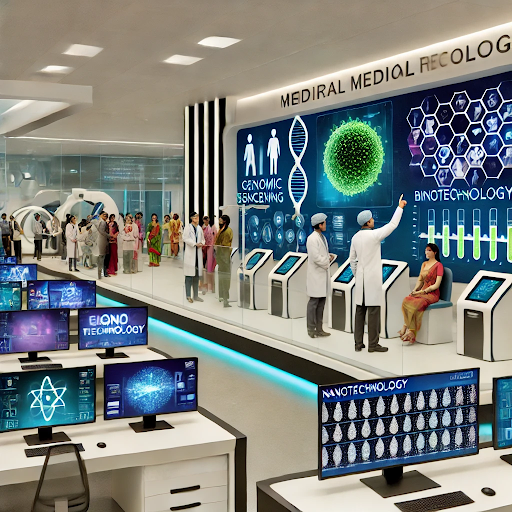
The integration of cutting-edge technologies such as artificial intelligence (AI), genomics, biotechnology, nanotechnology, and telemedicine has great potential for improving human health, particularly in a rapidly growing country like India. These technologies, including artificial intelligence (AI), genomics, biotechnology, nanotechnology, and telemedicine, promise to revolutionize healthcare by improving diagnostic accuracy, treatment efficacy, and overall patient care. However, this integration also poses several challenges, including ethical concerns regarding patient data privacy, infrastructural deficits in rural healthcare facilities, regulatory hurdles in adapting to rapid technological advancements, and issues related to the cost and accessibility of advanced healthcare technologies. This article delves into the profound impact and the multifaceted challenges that emerging technologies present to the biological sciences in the context of human health in India.
The Promise of Emerging Technologies in Biological Sciences
Emerging technologies such as artificial intelligence, genomics, biotechnology, nanotechnology, and telemedicine hold great promise for revolutionizing healthcare in India.
Artificial Intelligence and Machine Learning
AI and machine learning (ML) have emerged as transformative forces in healthcare. These technologies can analyze vast datasets quickly and accurately, enabling the development of predictive models for disease outbreaks, personalized medicine, and improved diagnostic tools. In India, AI applications are being used in radiology for image analysis, in pathology for disease detection, and in genomics for personalized treatment planning.
Genomics and Precision Medicine
Genomics has the potential to change healthcare by studying the genetic causes of diseases and creating personalized treatment plans based on individual genetic information. In India, initiatives like the Genome India Project aim to map the genetic diversity of the Indian population, paving the way for precision medicine tailored to the genetic makeup of individuals.
Biotechnology and Drug Development
Biotechnology is crucial in developing new drugs, vaccines, and therapies. India has been a leader in biotech innovation, with companies like Bharat Biotech and Biocon pioneering the development of new drugs, vaccines, and therapies. The rapid development of COVID-19 vaccines exemplifies the potential of biotech advancements in addressing public health challenges.
Nanotechnology
Nanotechnology provides opportunities for targeted drug delivery, precise diagnostic tools, and advanced tissue repair techniques in the medical field. In India, research in nanomedicine is progressing, with applications in targeted drug delivery systems that enhance the efficacy and reduce the side effects of treatments.
Telemedicine and Digital Health
Telemedicine has gained significant traction in India, especially during the COVID-19 pandemic. Digital health platforms are connecting patients in remote and underserved areas with healthcare providers, improving access to medical services for those who are geographically isolated.
Challenges in Integrating Emerging Technologies
The integration of emerging technologies in healthcare faces various challenges, including ethical concerns, infrastructural barriers, regulatory hurdles, and issues related to cost and accessibility.
Ethical and Privacy Concerns
The integration of AI, genomics, and other technologies raises significant ethical and privacy concerns. The use of AI in healthcare must ensure patient data confidentiality and address biases in algorithms that could lead to inequitable healthcare outcomes. Genomic data, being highly sensitive, necessitates stringent data protection measures to prevent misuse.
Infrastructural and Technological Barriers
Despite advancements, India faces infrastructural challenges that hinder the widespread adoption of these technologies. Many healthcare facilities in rural areas struggle with inadequate technology and limited internet access, which hinders the successful implementation of telemedicine and digital health solutions.
Regulatory Hurdles
The rapid pace of technological advancements, such as the introduction of AI in healthcare without adequate regulatory guidelines, often outstrips existing frameworks, posing a significant challenge for the governance of new healthcare technologies. In India, immediate and comprehensive regulatory changes are imperative to promote the safe and ethical use of emerging technologies while fostering innovation in the healthcare sector.
Cost and Accessibility
While emerging technologies promise to improve healthcare outcomes, their high costs can limit accessibility. In a country with wide gaps in wealth and resources, providing fair access to advanced healthcare technologies poses a significant challenge.
Skilled Workforce
Having a trained workforce is essential for successfully incorporating advanced technologies into healthcare practices. There is a pressing need for training and education programs to equip healthcare professionals with the knowledge and skills to utilize these technologies effectively.
Impact on Human Health in India
Emerging technologies have significantly influenced human health in India, enhancing diagnostics, enabling personalized treatment plans, improving drug development, and increasing healthcare accessibility.
Improved Diagnostics and Early Detection
Emerging technologies have significantly enhanced diagnostic capabilities, enabling early detection of diseases. AI-powered diagnostic tools and advanced imaging technologies can identify abnormalities with greater accuracy, leading to timely interventions and improved patient outcomes.
Personalized Treatment Plans
Genomics and AI are driving the shift towards personalized medicine, where treatment plans are tailored to an individual's genetic profile and health history. This approach increases the efficacy of treatments and reduces adverse effects, improving patient care quality.
Enhanced Drug Development
Biotechnology and AI are accelerating the drug discovery and development process. In India, the use of AI to screen potential drug candidates and predict their efficacy is reducing the time and cost associated with bringing new drugs to market. This has significant implications for treating diseases that have been challenging to address with traditional approaches.
Accessibility of Healthcare
Telemedicine and digital health platforms are making healthcare more accessible to India's diverse and widespread population. Patients in remote areas can consult specialists through telemedicine services, reducing the need for travel and ensuring timely medical attention.
Public Health Management
AI and big data analytics are playing a crucial role in public health management. Predictive models can forecast disease outbreaks and inform public health strategies, as seen during the COVID-19 pandemic. These technologies enable proactive measures to control the spread of infectious diseases and improve overall public health outcomes.
Case Studies and Examples
This section showcases real-world applications of emerging technologies in healthcare through case studies such as AI in diabetic retinopathy screening, the Genome India Project, and Bharat Biotech's COVID-19 vaccine development.
The Role of AI in Diabetic Retinopathy Screening
India has a high prevalence of diabetes, leading to complications like diabetic retinopathy, a leading cause of blindness. AI-based screening tools have been developed to detect diabetic retinopathy from retinal images. These tools, deployed in various clinics, have improved the accuracy and efficiency of screenings, enabling early intervention and preventing vision loss.
The Genome India Project
The Genome India Project aims to create a comprehensive genetic database of the Indian population. This initiative will facilitate research into genetic diseases prevalent in India and support the development of personalized medicine. The project highlights the potential of genomics in understanding and addressing health challenges unique to the Indian population.
Bharat Biotech and COVID-19 Vaccine Development
Bharat Biotech's rapid development of the Covaxin vaccine exemplifies the impact of biotechnology in addressing public health crises. The vaccine was developed, tested, and rolled out in record time, showcasing India's capabilities in biotech innovation and its critical role in managing the COVID-19 pandemic.
Telemedicine in Rural India
The implementation of telemedicine services in rural India has significantly improved healthcare accessibility. Platforms like eSanjeevani, a telemedicine service by the Ministry of Health and Family Welfare, have facilitated millions of consultations, providing essential medical services to remote areas during the pandemic.
Future Directions and Recommendations
This section presents recommendations for strengthening regulatory frameworks, investing in infrastructure, enhancing education and training, promoting public-private partnerships, and fostering research and development to maximize the benefits of emerging technologies in healthcare.
Strengthening Regulatory Frameworks
India needs to develop robust regulatory frameworks that keep pace with technological advancements. These frameworks should ensure the ethical use of emerging technologies, protect patient data, and foster innovation.
Investing in Infrastructure
Significant investments are required to upgrade healthcare infrastructure, particularly in rural areas. Improving internet connectivity and providing necessary technological tools will be crucial for the successful integration of digital health solutions.
Enhancing Education and Training
Educational institutions and healthcare organizations should collaborate to develop training programs that equip healthcare professionals with the skills needed to leverage emerging technologies. Continuous professional development will be essential to keep pace with technological advancements.
Promoting Public-Private Partnerships
Public-private partnerships can drive innovation and facilitate the adoption of emerging technologies in healthcare. Collaborations between government agencies, private companies, and research institutions can pool resources and expertise to address healthcare challenges effectively.
Fostering Research and Development
Investing in research and development is vital for sustaining technological advancements in healthcare. India should encourage R&D initiatives in both public and private sectors to drive innovation and develop solutions tailored to the country's unique healthcare needs.
Conclusion
In conclusion, the integration of emerging technologies in the biological sciences has the potential to transform healthcare in India, overcoming challenges and paving the way for a promising future in improving the quality of life for the population. The integration of emerging technologies in the biological sciences offers transformative potential for improving human health in India. While significant challenges exist, ranging from ethical concerns to infrastructural deficits, the benefits of these technologies in enhancing diagnostics, treatment, and healthcare accessibility are undeniable. By addressing these challenges through strategic investments, robust regulatory frameworks, and collaborative efforts, India can harness the full potential of emerging technologies to revolutionize its healthcare landscape and improve the quality of life for its population. The journey ahead is complex, but with concerted efforts and innovative approaches, the future of healthcare in India looks promising.
Comments